Help! I think I have become a doomsday prepper

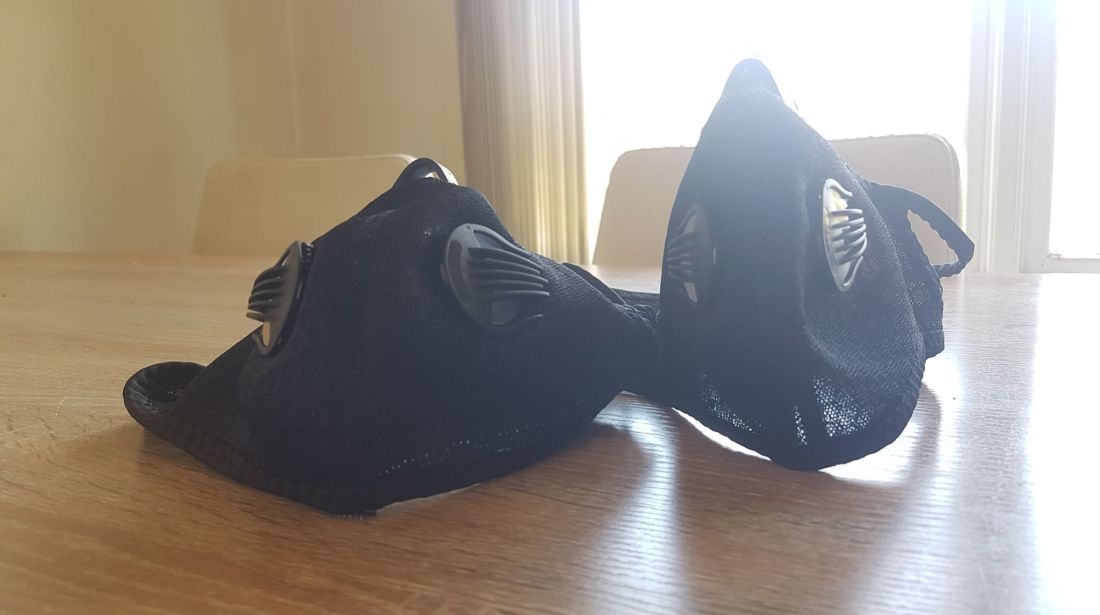
I ordered two P2 masks on Amazon and they were just delivered to my home. These are masks that protect from the small and dangerous particles contained in, among other things, bushfire smoke. I ordered one for me and one for my partner. It is early November and although the fire season has started, Melbourne is yet to be threatened by any major bushfires. Nonetheless, I know that the bushfire season is about to intensify, and this thought looms large as we remember last summer’s Australian bushfires.

The purchase of the P2 masks would not have occurred to me if it was not for last summer’s fires. I wouldn’t even have known what they were. Nonetheless, the smoke drifting in from nearby bushfires last year made air quality a concern. New South Wales and Sydney were especially affected by smoke from the bushfires. So were Canberra, Melbourne and various smaller towns.  And this year we could read about how smoke from bushfires have haunted California residents.

Last year, during days of hazardous air quality in Melbourne, I unsuccessfully attempted to find P2 masks in pharmacies around town. Unsurprisingly, they were sold out everywhere I went. So, while maintain that I feel better having the masks stored in my closet, I cannot help by feeling like a doomsday prepper.

Preppers are people that, for a variety of reasons, prepare for ‘shit to hit the fan’, and society as we know it to collapse. The reasons for the anticipated collapse vary between artificial intelligence, climate change, failure of the economic and agricultural systems, nuclear weapons and more. Preppers seek to make decisions today that will set them up for life in a dystopian future. Preparations include secret hide-out places in the woods, canned- and pickled food and water supplies, bug out bags, sometimes weapons and other tools of survival. Research has shown that preppers tend to consider their efforts a reasonable response and people who do not prepare to be naïve and to place too much trust in governments.

I have yet to build a bunker or started pickling and storing food around the house. Although las summer I did consider storing water as I read that fires risked polluting our drinking water. Moreover, as COVID-19 hit Australia people started stockpiling food at home. Most people (including myself), I believe, got slightly freaked out as the voids in the supermarket shelves expanded. A fight over the last toilet paper in a grocery store in Sydney provides a glimpse of what might come if supplies were to seriously dwindle.

The act of prepping is increasingly featured in literature, movies, tv-shows and podcasts. Despite the common association between prepping, paranoia and minority culture, researchers have found the practise to be more rational and common than those associations would suggest. Prepping they established, is often followed by personal experiences of crisis such as economic damage, ailment or job loss, making them seek out the comforts of preparation. A notion not that dissimilar from my own experiences last year of bushfire smoke and my subsequent prepping activities.

So, am I a prepper now? Or how can we draw a line between ordinary preparedness and the prepping associated with extreme paranoia. As a prepper in the first episode of the 2011 Netflix documentary series Doomsday Preppers said: “I don’t think I’m paranoid, I just think I am well informed and prepared.” Especially, along with climate change (scientifically supported reports of a world in crisis), is the line between prepping and common-sense activities becoming increasingly blurred? I am a cautious person and I would rather buy the car insurance before I get in a crash, so to speak. And as fires rage and the effects from climate change are becoming increasingly tangible, where do we draw the line between warranted worry and overpreparation?
How to get through this summer’s bushfires: Lessons from California

As we approach the Australian summer, we are also getting closer to another potentially devastating bushfire season. The upcoming fire season will be unlike any before as it takes place during a global pandemic. Australia has a lot to learn from the problems facing California, as they battle serious bushfires while still heavily accosted by the Coronavirus. Hundreds of fires are raging across California. The fires have destroyed more than a thousand homes and non-residential buildings and at least seven people have lost their lives. California, with a similarly flammable landscape to Australia, helps us foresee what is to come. It demonstrates how the threat of fires is intensified by the pandemic and vice versa. As the Australian summer approaches, in a country still recovering the losses from last summer’s fires, there is a lot to learn from the situation currently facing California.

In California, incarcerated labourers with an hourly rate of $2 USD and promises of reduced sentences, are an important firefighting resource. However, this year many convicts are unavailable following various severe Coronavirus outbreaks in prisons. Other, non-incarcerated firefighters are exposed to the added risk of contracting the virus as they work and often live in close proximity of each other. This in turn could lead them to unintentionally bringing the virus back home to close family and friends. Moreover, the exposure to the smoke from bushfires put firefighter at risk of worsening the COVID-symptoms and its consequences. These are concerns to be taken seriously in relation to the Australian firefighting response. During last summer’s fires, the Australia government was heavily critiqued for their lack of financial compensation for the large volume of volunteer firefighters making up Australia’s bushfire response. In the coming weeks, the Australian Fire and Emergency Services need to reflect on its bushfire response to minimising the adverse impact of the virus.

Also, the virus brings with it some added difficulties surrounding evacuation. Over a hundred thousand people have had to evacuate around California, leaving their homes to escape the deadly fires. It is crucial that Australia review their evacuation procedures. How will people be evacuated and where will they be given emergency shelter to prevent the virus to spread? This, I argue, requires particular attention in view of the recent hotel quarantine failure in Victoria, which caused the state’s deadly ‘second wave’ of infections. The Australian government should carefully consider the most appropriate evacuation procedures and how to support people that lose their homes temporarily or more long-term.

Finally, prisoners are vulnerable in a pandemic, due to the large number of people forced together in small spaces. Due to their restricted movements, they are also vulnerable to disasters such as bushfires. In California, incarcerated people were suffering as the fires approached. Although the areas around the prison had been evacuated, the prisoners were left in-place. They lack the authority to evacuate and were left breading the toxic smoke. For a prison system challenged by a pandemic that feeds off the proximity of bodies in confined spaces, bushfires represent an added threat. The Australian Corrections still have some time to prepare and should consider when and how a necessary evacuation should take place in order to avoid unnecessary harm to people in their care.

Although parts of Australia are currently in the midst of their bushfire season, the most flammable landscapes still have theirs to come. Judging from the early start to last year’s fire season, larger bushfires could be expected within the month and this year will be unlike any before. Among the added concerns are the exposure to toxic smoke from the fires, the risk of firefighters getting infected by the virus, mass evacuation and prisons. Thus far, we have been asked to stay home in order to remain safe from the pandemic. Leaving home is to expose ourselves and those we love to the virus. Severe fires will threaten some people’s access to that safe haven. Consequently, the Australian government needs to think through the implications of such loss and how to best get through the summer.

Remember the bushfires? The Royal Commission sees bushfires and climate back on the agenda

As COVID-19 has disrupted our everyday lives, last summer’s fires have all but escaped our immediate consciousness. Along with the clearing of the smoke, the fact that just last summer (November 2019 – February 2020) large parts of Australia were under duress from fires has gradually lifted from our minds. The bushfires largely disappeared from the political and news agendas as a result of tackling the current health crisis. From being everywhere on national (and international) news, it became rare to see the bushfires mentioned. The fires were the perfect, terrible example of what a world changed by human impact on the climate looks like. Therefore, the fact that the fires so quickly became overshadowed by the virus was a loss for everyone seeking government action to reduce further impact on the climate. Although we can speculate whether the long-term effects of COVID-19 will be better or worse for the environment, for environmental activism fuelled by the fires, the timing was tragic.  

The immediate and undeniable threat of hot, scorching fires make them the perfect symbol of climate change. Similar to COVID-19, fires have clearly conceivable consequences if no actions are taken. Bushfires are immediate, terrifying and pose direct threats to humans, wildlife and properties. Therefore, bushfires require government action, both during fire events such as by fighting the fires and coordinating evacuation but also through the repeated inquiries that tend to follow serious fire event. These inquiries are often aimed at improving preparedness and responses to bushfires, such as the 2009 Royal Commission into the Black Saturday fires. Climate change on the other hand, is the opposite. We are now experiencing the effects of large amounts of greenhouse gases such as carbon dioxide, methane and nitrous oxide being released into the Earth’s atmosphere over the last two centuries. Although the consequences of global warming are delayed, the effects of the changing climate are increasingly experienced around the world. Examples of the effects are rising sea levels, more hot days, extreme weather events as well as acidifying and warming oceans (See WWF for more details on the effects of global warming in Australia). As the summers are becoming warmer and dryer, fire regimes are changing, fire seasons are becoming longer and extreme fire events more frequent.

Although the last couple of months have made the fires fade from the public consciousness, the last two weeks saw the start of the Royal Commission into National Natural Disaster Arrangements (Block one of hearings were carried out between the 25th of May and the 4th of June), into last summer’s fires. This has served to put bushfires back on the agenda. Royal Commissions are ad-hoc official public inquiries into a particular issue. However, their efficiency has been questioned. Many of the recommendations that stem from these inquiries are slow to be taken up or are never implemented at all. Moreover, the Victorian Bushfires Royal Commission in 2009 cost a minimum of A$40 million over a period of 18 months. Naturally, this money could have been spent differently to manage fires and prevent harm.

So, the question to be asked is: is there any value to this inquiry? TheRoyal Commission into National Natural Disaster Arrangements, although potentially toothless, has put bushfires back on the agenda. However, will this inquiry contribute with anything new and valuable? A report by the Bushfire and Natural Hazards CRC in 2017 into 51 major bushfire inquires between 1939 and 2013 in Australia found that several themes tend to reoccur. The 1728 recommendations of these inquiries were grouped into six categories: shared responsibility, preparedness, response, recovery, fire agency organisation, and, research and technology. However, climate change was not one of these.

On the contrary, the terms of reference of the current public inquiry acknowledge the role of the changing global climate and what this means for Australia’s capacity to prevent and response to bushfires. The first days of the inquiry’s public hearings have also centred around the effects the changing climate is having on the frequency and severity of bushfires. Among others, Karl Braganza, the head of climate monitoring at the Bureau of Meteorology, described how increasing temperatures, especially more frequent heatwaves and decreased rainfall is contributing to the fire conditions witnessed last summer. It was also made clear that severe fire seasons, similar to last summer’s, will be repeated in the decades to come.

The Royal Commission’s emphasis on climate change is a step in the right direction and hopefully these tendencies will be palpable in the Commission’s recommendations and beyond. Given that the Australian government largely has denied the impacts of climate change and even more so avoided taking action against it, I hope the Royal Commission can contribute to a formal acknowledgement of climate change, the effects of which are discernible in the occurrence of longer fire seasons and more extreme fire events. In addition, with the initiation of the inquiry, bushfires are back on the agenda and this is a tendency that environmental activists, academics and practitioners can and should take advantage of to further our cause.

Enter: Fire

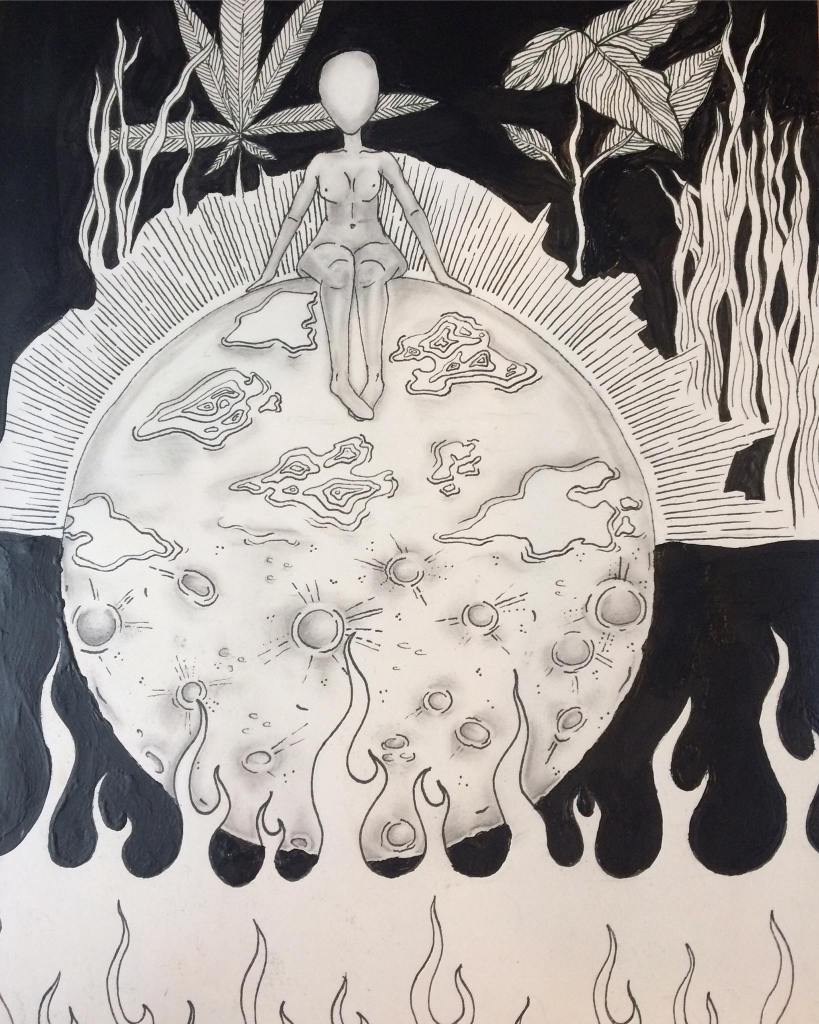
Drawing by Lina Hälleberg

The Anthropocene is a name given to the geological epoch during which human beings have come to fundamentally change the geology and ecosystem of the Earth. Increasingly we are controlling the world around us, removing unwanted vegetation and habitats, turning pastures into cities, paths into paved roads. We have drilled the Earth’s core, built towns in the desert, domesticated animals and introduced non-native species. The list goes on and on. I find it important to take a step back and remind ourselves that this is a self-proclaimed right. Other animal species utilise the gifts from Earth to keep themselves and their gene pool alive. In contrast, we, the rich and wealthy, take from the Earth in order to achieve increased luxury, status, enjoyment and wealth while others suffer devastating famine, injury and death. We want to move faster and reach higher than anyone else, we want to conquer the land, the water, the atmosphere and the outer space. We are indeed ruling Earth with an iron fist. The realisation that the effects of unrestrained human activity is reverberating over the planet and attempts to ameliorate the damage is making this abundantly clear; such as our efforts of keeping species at the edge of extinction alive and to prevent others from proliferating. We might seem to be in complete control of the planet. But then there is fire reminding us of our limitations.

Last year we witnessed another devastating bushfire season in California, largescale fires in the Amazonas – that along with deforestation is considered especially destructive for the ecosystem – and hundreds of bushfires in Siberia and Indonesia affecting the air quality in nearby cities. In Australia the fire season started early and is considered to be one of the worst ever recorded. These fires followed extreme heat and below average rainfall. The harm and damage from these fires are due to their location, many burning along the eastern part of the country, close to many human settlements. Many people have lost their lives, many more their homes, millions of acers of land have burnt, animals are dead or dying and the fire season is far from over.

Fire moves in and removes everything in its path. It is the Earth rising up against its emperor – not overthrowing it but weakening it substantially. As long as people have lived on this planet, fire has been by their side. Fire on Earth is indeed like the mythological Phoenix, causing death only for life to rise again from its ashes. After vegetation burns, new life returns. With fire by our side we have been able to conquer the world, remoulding the land encountered, making it habitable for us. But at times fire also keeps us in place. It comes in, it destroys, and it shows us that what we have built, the security induced oasis in its path, is in fact instable and fleeting. Reports of increased and more severe fires around the world following Anthropocene climate change, makes me wonder if fire is entering as the new dictator on Earth. Can we regain control over it, will we be forced to follow its orders, or can we learn to live side by side, respecting each other’s territories?

But how come the Australian government is denying the fact that fire has entered the political arena? While acknowledging the victims of fire, many Members of Parliament are still denying the fact that fires are exceptional and that they are induced by climate change. Now, I suppose it is a political game, part of its grandstanding, not to look the challenger in the eye and not to acknowledge their sway. Pretending that your adversary is lesser than you and indeed wishing for it to be so. But Scott Morrison, the next election is impending, fire is gathering its forces and the people, the people that you represent, are calling for a meeting between fire and you. We want to witness your confrontation, listen as you acknowledge fire’s existence and follow along as you prepare for the most important showdown of your life.