The pains of acceptance: climate change and the distraction of responsibility

Over the weekend I stumbled upon an article with the headline: ‘Craters on the seabed in the Arctic spew out methane gas’ (own translation from Swedish).

Although I did not exactly understand what this meant, the title was alarming. Yet, there was some hope. I continued reading, thinking that maybe, just maybe, this is a phenomenon that occurs naturally. For some reason, this thought provided me with some comfort.

Nonetheless, as I kept reading, I quickly found out that rising sea temperatures are contributing to the methane’s transitioning to gas form, releasing it from its underground slumber. Eventually, these gases end up in the atmosphere, adding to the abundance of greenhouse gases (which trap heat in the atmosphere) which in turn leads to continued global warming.

But why was my initial though that this occurrence was ‘natural’ and not manufactured though human industries and lifestyle choices a comforting one? The consequences of both are the same.

The answer is perhaps simple. The difference between ‘natural’ and humanly caused climate change is that the latter is of our own making, making us accountable. It makes us responsible not only for the scale of its occurrence but also responsible to, if possible, find a solution. Would it not be easier to assume that the problem was outside our control?

I often hear climate change deniers refer to the fact that climate change occurs naturally, and that the global temperature have always fluctuated. References have consciously been excluded here…

I can understand how that belief would be comforting; if we did not cause climate change, there is less reason for us to worry about solving the crisis, with the discomforts and sacrifices this entails. And then, would it even be considered a crisis at all?

Nonetheless, the climate change we are currently experiencing is different, most of all seen to its rapid speed. The acceleration of global temperatures is faster than at any point in the last 2000 years, fast enough for us to be able to witness the collapse of our ecosystem up close. As many people say: ‘Let’s make sure we go see the Great Barrier Reef before it’s too late.’ That is, before water temperatures have led to the devastation (bleaching) of the coral reefs.

Anthropocene, or humanly cause, climate change is caused by us. We are contributing to the coral reefs bleaching, to methane gas being released into the atmosphere and much more. Accepting our role in climate change is painful. It would be much easier to keep on as if this was all outside of our control. But a crushing majority of climate change scientists agree climate change is our own doing.

For me, that means that we are responsible to, if not prevent climate change, to at least slow it down. However, squabbles about responsibility can easily be circumvented. Does it matter what I do if large corporations and the majority of the global north continue in the same way?

In the end, it does not matter whether climate change is due to natural, human causes or a combination of both. When we see something that is wrong, it is our duty to intervene if we can. Responsibility can be a distraction from our obligations to this planet that we love and depend on so much.

Death by air

Australia is a car dependent country. A majority of people travel to work by car in all Australian states and capital cities. And poor or no access to public transport is quoted as the main reason for people to drive to work or study. The recent finding that the death of Ella Adoo-Kissi-Debrah, a nine-year-old girl in the UK, is attributed to air pollution draws attention to an often-ignored fact; air pollution kills. In fact, air pollution is a serious threat to our health and wellbeing, and we need to reconsider the way we are living in and designing our cities.

Last week’s landmark decision from the Coroner’s Court in London found that air pollution substantially contributed to the death of nine-year-old Ella Adoo-Kissi-Debrah’s seven years ago. Ella suffered from serious asthma and died after almost three years of serious illness. Living close to South Circular Road, a major road on the outskirts of London, exposed Ella and her family to high levels of nitrogen dioxide. Dangerous levels that contributed to her ill health and the asthma-attack that led to her death.

Ella’s reoccurring incidents of poor health coincided with episodes of high air pollution in the area where she lived. The coroner concluded that the levels of nitrogen dioxide in the air where Ella lived exceeded the World Health Organization’s guidelines. The dangerous levels of air pollution persisted for a prolonged period of time despite efforts to reduce them. Following Ella’s death, the government has promised to oversee transport in the area and to reduce the pollution.

The harms of ambient air pollution are well-known, although, perhaps more associated with smoke from nearby bushfires, rubbish burning, and to particular locations such as near coal-fired power plants and in countries such as China, India and Bangladesh, than to transport in capital cities in the UK or Australia. The London Coroner’s decision contradicts this assumption. Instead, air pollution in heavily trafficked areas is harmful and even lethal. And what is worse, it affects those struggling economically more since they cannot always choose where to live. The World Health Organization estimate that nine out of ten people breathe air that exceeds their pollution guidelines and that annually about seven million people die as a result. 

Apart from contributing to global warming, private vehicles cause harmful and deadly air pollution in our cities. We need to reconsider our options and prioritise extending the public transport network across Australia. Moreover, locating job opportunities across the city will reduce the need to travel. Finally, we need to closely monitor air quality around residential areas to minimise the risk of exposing people to hazardous levels of pollution.

The State of Emergency/Disaster as the new emergency: Climate change and the new role of the democratic state

Yesterday, just over three weeks into Melbourne’s second lockdown, Daniel Andrews, the Premier of Victoria announced stage four restrictions for metropolitan Melbourne and a State of Disaster in Victoria. The stage three restrictions already required people to stay home except for work, health reasons, essential shopping and exercise. With the new restrictions in place, active as of 6pm last night, a curfew is imposed between 8pm and 5am when the only reasons to leave your home are for work and medical care. Among other restrictions, exercise must now take place within 5km of your home, at a maximum of one hour per day and only one person per household can go shopping each day. Since midnight Wednesday the 22nd of July, face masks are mandatory and those caught without one risk a fine of $200. Victorians caught failing to comply with the social distancing restrictions, including the new rules, will be fined $1600.

These restrictions have a severe and limiting impact on Victorian residents’ lives. We are experiences heavily restricted movements (locally and internationally), the closing of businesses, the suspension of sporting and cultural events and institutions, surveillance of people and forced hotel quarantine for returning Australians at a cost of at least 3,000 to be paid by the traveller. Most of us accept the restrictions since we understand the severity of the novel Coronavirus, because others seem to accept them, but also because we submit to the settler colonial state of Australia. That is, most of us tend to follow the laws and if the laws make us stay home, we do.

Nonetheless, we are many who feel conflicted about whether the measures are appropriate or whether they are causing more harm than good. The stay-at-home measures affect people disproportionately depending on whether you are isolated in a studio apartment without a balcony or a 500 square meter mansion with a rose garden. Moreover, we are seeing that these measures are applied differently on different populations and tend to disproportionately disadvantaged lower socioeconomic groups. This is demonstrated by the 3,000 residents in nine public housing towers in North Melbourne and Flemington, two relatively central neighbourhoods in Melbourne, who on the 4th of July were put under ‘hard lockdown’ for up to 14 days (the full time applied to one of the towers) after high numbers of infections were detected in the buildings. The high density in the public housing towers, the shared facilities such as laundry rooms and lifts, airflow, plumbing and the high numbers of infections were used to justify the harsh measures. Residents in the public housing towers under ‘hard lockdown’ or ‘detention directions’ were not permitted to leave their homes. These strict measures were not applied to anyone else in Victoria and in private apartment towers, not far from the public housing ones, people were living according to the general restrictions in Melbourne.

The hard lockdown represents excessive and punitive measures directed towards already over-policed communities, while outbreaks in more affluent areas are met with a dissimilar response. This is a punishment of the socially and economically disadvantaged public housing residents already neglected by the system.

So, what is the regulation that allows the government to put in place such restrictions? These laws are justified by a state of emergency initially declared in Victoria on the 16th of March 2020 and which is currently extended until the 16th of August 2020. State of emergency or state of exception is a concept coined by Carl Schmitt writing in Germany during the Nazi rule. The concept refers to the sovereign’s right to act outside the normal legal constrains when circumstances are out of the ordinary. Both legally and discursively the state of emergency justifies extreme actions and allows the sovereign additional powers to act. The state of emergency or the state of exception allow the temporary suspension of many human rights treaties. Consequently, it has been noted that restrictive measures to COVID-19 around the world come to infringe on human rights such as the freedom of association, the freedom of movement and the right to liberty. These are methods which could be misused for political purposes that would severely detract from democratic rule.

However, the state of exception is not so exceptional anymore, instead it is becoming the new normal. The fear is that restrictions will remain following the end of the COVID emergency, similar to the way the 9/11 terrorist attacks led to the extended powers of the US Presidents to perform torture and surveillance. Giorgio Agamben, one of modern day’s most influential writers on the state of exception, has severely criticised the Italian government’s response to the virus, claiming that the restrictive and repressive measures lack sufficient justified. This, he writes, reinforces the tendency to normalise the state of exception, ‘as a normal governing paradigm’, justifying a militarisation of society. Worryingly, yesterday the Victorian Premier declared at the press conference that he is prepared to make amendments to the 6-month restriction to the state of emergency, showing clear signs of a normalisation of these laws.  

The state of emergency is not only applied in relation to health crises but can be called on by governments to respond to dangerous and extraordinary circumstances such as threats to national security and natural disasters. Yesterday, the Victorian Government also declared a state of disaster which according to the Premier Daniel Andrews ‘will give our police additional powers to make sure people are complying with public health directions’.

A state of disaster was declared earlier in the year in large parts of Victoria as a response to the bushfires, allowing the government to, among other things, force the evacuation of people. I have previously written on the important connections between climate change and increasingly severe bushfire seasons. It is generally agreed that climate change such as dryer and hotter temperatures leads to increasingly severe bushfires (for example). Similarly, experts are highlighting the connections between the COVID-19 pandemic and climate change. Three out of four infectious diseases found in people originate from either wild animals or livestock and therefore our health is deeply entangled with the health of the ecosystem. Moreover, climate change is making large parts of the human population more vulnerable to disease and other health threats. For example, the exposure to the smoke from last summer’s fires is intensifying our vulnerability to respiratory illnesses.

With the increasingly severe consequences of climate change and our degrading ecosystem, demonstrated in bushfires and the pandemic, the motives for the state of emergency/disaster measures will increase with the risk of detracting from democracy in ways already demonstrated, such as through the encroachment on human rights agreements. Moreover, as demonstrated in Melbourne by the treatment of public housing tenants, there is no guarantee that measures will apply equally to all. Or rather, it is unlikely that they will, since everyone enters a state of exception with access to dissimilar resources and capitals. It might make sense to have state of disaster measures in place for the crisis, but when the crisis becomes the new normal, it is worth considering the new role of the democratic state. We have to be careful, moving forward, that responses to emergencies are balanced against human rights and democratic values.
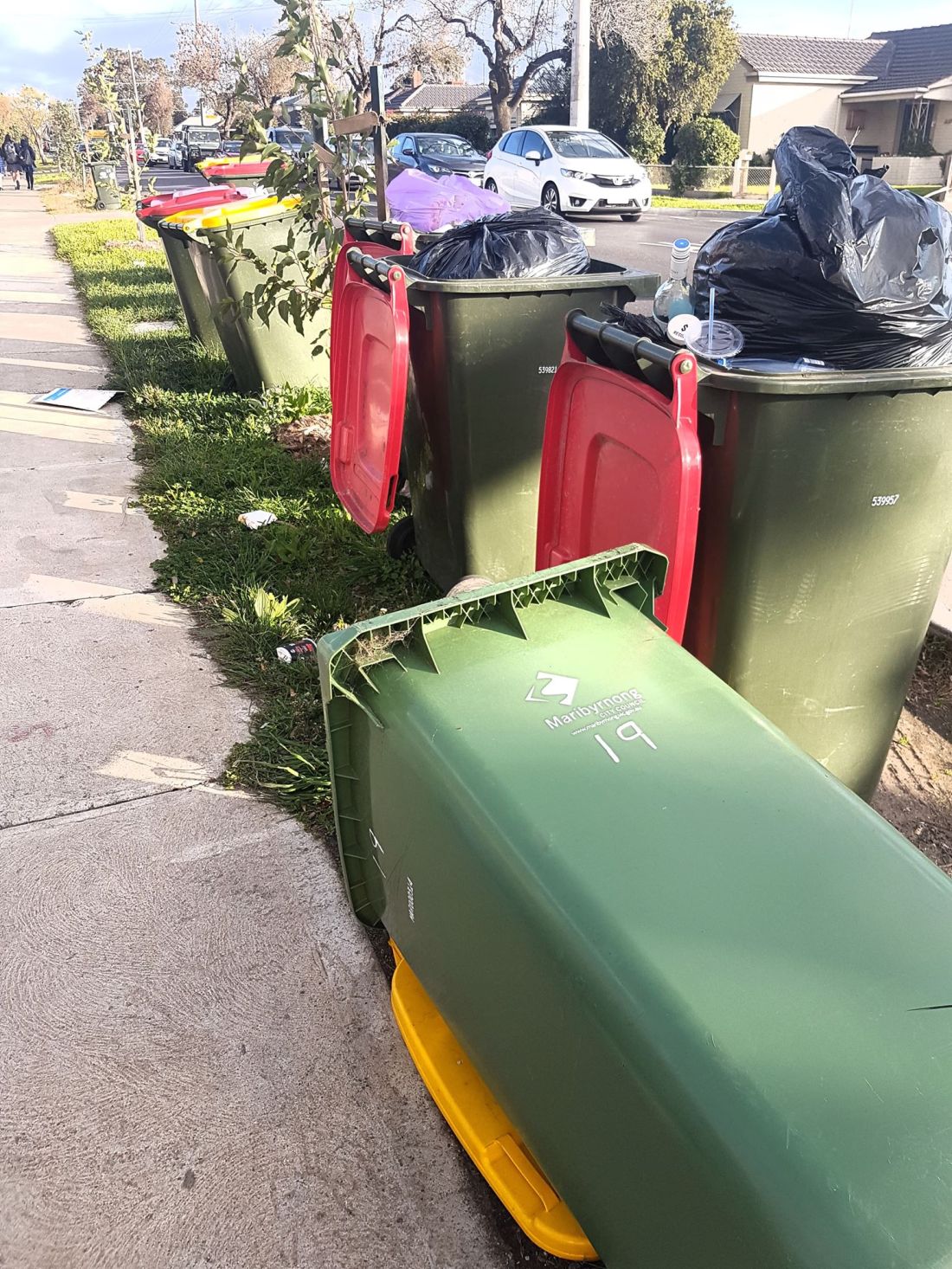
Waste: Out of sight, out of mind

Today I am writing about something that often occupies my mind: waste. Waste is a word that encompasses so many things. A beloved item, clothing out of style or a mouth-watering meal from the week before can with the passing of time turn to waste in our minds. I say in our minds because waste, more than anything, is a state of mind and a highly individual framing. Waste, in all its forms, could therefore be understood as that which we no longer desire to be in the presence of. This goes for broken items and spoiled foods, but it also encompasses a lot of fully functional but for some reason undesirable items. When no longer desired, such items become unwanted, an eyesore and are classified as waste, followed by attempts to do away with it. Rubbish is therefore often hidden away under kitchen counters, the sights and smells restricted by bin lids, and as soon as possible we seek to remove it from our living quarters to the large bins at the back of the house. After it has been picked up and taken away, it is out of sight and out of mind. When possible, we like to send it to a country far, far, away, cram it into stockpiles or dig it down in landfills. Waste out of sight allows us to forget about it and it permits us to continue to produce and consume more items.

I am not necessarily leading up to a solution here but instead I am emphasising what I see as a major issue: that we are out of touch with our rubbish. As we place it in the bin, we could think about whether we could give it another life, whether it could be repurposed or anyone else would find value in it. Yet, even this is to undershoot. Instead, that thought should better come to us in the moment that we purchase something. Buying an item, or even accepting it for free, do we consider the lifespan of it and could we consider getting a second-hand item instead? I reckon that it is way too easy to wink at the fact that a now so desirable item, one day will seem redundant to us and will end up as waste.

Last week we could read about Liz and Brian, a Melbourne couple who put their rubbish bin out for the first time in a year. To clarify, this consisted of only one bin of landfill waste that they had collected over 12 months. So, how was this achieved? By reusing, recycling and repurposing as much as possible. They also try to reduce waste by avoiding purchasing items such as vegetable in plastic packages. In other words, they have managed to reduce their contribution to landfill through conscious buying, reusing and disposal. When possible, they give items a second life. As the couple themselves recognise, this is a time-consuming task and not achievable for everyone. Yet, we could all reduce our landfill by applying these same principles.

Although not an anticipated alternative per se, if we were forced to look at the waste we generate, perhaps to sleep next to it at night, to display it openly in the front yard or as a mountain in the centre of town, would that change our relation to consumption and waste? What if the council ceased all waste collection for a year? Would visual and other sensory confrontation with waste change our relationship to it? And could it also shift our relationship to our accumulation of possessions and the objects of our desire? As it is now, it is way too easy to drop something in the bin and forget that it ever existed. I know, because forgetting is often what I try to do.

What do or could you do to reduce your landfill contribution?

Remember the bushfires? The Royal Commission sees bushfires and climate back on the agenda

As COVID-19 has disrupted our everyday lives, last summer’s fires have all but escaped our immediate consciousness. Along with the clearing of the smoke, the fact that just last summer (November 2019 – February 2020) large parts of Australia were under duress from fires has gradually lifted from our minds. The bushfires largely disappeared from the political and news agendas as a result of tackling the current health crisis. From being everywhere on national (and international) news, it became rare to see the bushfires mentioned. The fires were the perfect, terrible example of what a world changed by human impact on the climate looks like. Therefore, the fact that the fires so quickly became overshadowed by the virus was a loss for everyone seeking government action to reduce further impact on the climate. Although we can speculate whether the long-term effects of COVID-19 will be better or worse for the environment, for environmental activism fuelled by the fires, the timing was tragic.  

The immediate and undeniable threat of hot, scorching fires make them the perfect symbol of climate change. Similar to COVID-19, fires have clearly conceivable consequences if no actions are taken. Bushfires are immediate, terrifying and pose direct threats to humans, wildlife and properties. Therefore, bushfires require government action, both during fire events such as by fighting the fires and coordinating evacuation but also through the repeated inquiries that tend to follow serious fire event. These inquiries are often aimed at improving preparedness and responses to bushfires, such as the 2009 Royal Commission into the Black Saturday fires. Climate change on the other hand, is the opposite. We are now experiencing the effects of large amounts of greenhouse gases such as carbon dioxide, methane and nitrous oxide being released into the Earth’s atmosphere over the last two centuries. Although the consequences of global warming are delayed, the effects of the changing climate are increasingly experienced around the world. Examples of the effects are rising sea levels, more hot days, extreme weather events as well as acidifying and warming oceans (See WWF for more details on the effects of global warming in Australia). As the summers are becoming warmer and dryer, fire regimes are changing, fire seasons are becoming longer and extreme fire events more frequent.

Although the last couple of months have made the fires fade from the public consciousness, the last two weeks saw the start of the Royal Commission into National Natural Disaster Arrangements (Block one of hearings were carried out between the 25th of May and the 4th of June), into last summer’s fires. This has served to put bushfires back on the agenda. Royal Commissions are ad-hoc official public inquiries into a particular issue. However, their efficiency has been questioned. Many of the recommendations that stem from these inquiries are slow to be taken up or are never implemented at all. Moreover, the Victorian Bushfires Royal Commission in 2009 cost a minimum of A$40 million over a period of 18 months. Naturally, this money could have been spent differently to manage fires and prevent harm.

So, the question to be asked is: is there any value to this inquiry? TheRoyal Commission into National Natural Disaster Arrangements, although potentially toothless, has put bushfires back on the agenda. However, will this inquiry contribute with anything new and valuable? A report by the Bushfire and Natural Hazards CRC in 2017 into 51 major bushfire inquires between 1939 and 2013 in Australia found that several themes tend to reoccur. The 1728 recommendations of these inquiries were grouped into six categories: shared responsibility, preparedness, response, recovery, fire agency organisation, and, research and technology. However, climate change was not one of these.

On the contrary, the terms of reference of the current public inquiry acknowledge the role of the changing global climate and what this means for Australia’s capacity to prevent and response to bushfires. The first days of the inquiry’s public hearings have also centred around the effects the changing climate is having on the frequency and severity of bushfires. Among others, Karl Braganza, the head of climate monitoring at the Bureau of Meteorology, described how increasing temperatures, especially more frequent heatwaves and decreased rainfall is contributing to the fire conditions witnessed last summer. It was also made clear that severe fire seasons, similar to last summer’s, will be repeated in the decades to come.

The Royal Commission’s emphasis on climate change is a step in the right direction and hopefully these tendencies will be palpable in the Commission’s recommendations and beyond. Given that the Australian government largely has denied the impacts of climate change and even more so avoided taking action against it, I hope the Royal Commission can contribute to a formal acknowledgement of climate change, the effects of which are discernible in the occurrence of longer fire seasons and more extreme fire events. In addition, with the initiation of the inquiry, bushfires are back on the agenda and this is a tendency that environmental activists, academics and practitioners can and should take advantage of to further our cause.

Advancing to normalcy

Many countries around the world are starting to lift the COVID-19 emergency measures and to slowly return back to normalcy. The reason, more than anything, seems to be to slow the effects of the anticipated recession as state funds are dwindling and money printing presses are running warm. The dos and don’ts of managing this health crisis, I leave to others to discuss. Instead, I want to think through travelling and transport choices in the COVID and post-COVID world. Clearly, many communities are put under enormous economic pressure, especially those that are dependent on tourism, and unemployment numbers are climbing. However, I argue that we should not be so quick to rush back to previous travelling behaviours and in this blog post I want to think through ways to advance to a new normalcy, rather than moving back to what was before.

Firstly, how will the pandemic affect the way we move in the city? The question of public transport is caught up in the issue of contamination as the system is currently built around a high density of bodies in shared spaces. During the last two months, a few times I have had to utilise public transport for essential travel, and the change in travelling behaviour is striking. The empty trams have an eerie feel to them with only a handful of passengers in the otherwise so packed spaces. Naturally, this is due to less people moving around in the city but during the last two months more people have also been selecting cycling over public transport. As we transition out of in-house lockdowns and people once again have a reason to move around the city, will people continue to avoid public transport in favour of cycling, or will there be an increase in the use of cars? Resorting to the private spaces of the individual vehicle is not an option for everyone and it is certainly not a sustainable one. Instead I suggest that other options should be explored. In Melbourne, following the examples of major cities around Europe, there is a proposal for footpaths and bike lanes to be expanded in order to provide alternatives to public transport and to allow for more distancing between people. This will be at the expense of on-street parking. These are great examples of the ways transitioning out of isolation can be combined with more sustainable patterns of life. 

At the same time, the European Union is urging European countries to reopen the boarders. “This is not going to be a normal summer… but when we all do our part we don’t have to face a summer stuck at home or completely lost for tourism industry,” Margrethe Vestager, the EU Commission Executive Vice-President announced at a press conference last Wednesday. Although I strongly sympathise with the tourist industry and European countries dependent on wealthy tourists from abroad, let us consider alternative to air travel with less adverse effects on the environment.

Luxuries become habits and habits becomes taken for granted. Before the pandemic, travelling to faraway destinations was no longer a luxury but rather the bare minimum requirement for many. For the last two months, here in Melbourne, we haven’t been allowed to travel anywhere really. As someone who works from home, my life has consisted of a five-kilometre radius around my house, which is about as far as I get on my runs. To travel anywhere right now seems like a luxury to me. I long for the Victorian countryside outside of Melbourne, the beaches and the valleys. I long to meet up with my friends in the city, to see my colleagues at work and to travel to visit my friends in different suburbs. Let us not resort to old habits of treating international flights as the norm. Let us instead treat it as something special, a luxury or the last resort.

Tourism can be undertaken in various ways and local attractions have a lot to offer. Nonetheless, the allures of the different, the far-away and the unknown remain. So, perhaps it is time to properly invest in more sustainable modes of travel. Holidays by train is the new black in Europe, but it is expensive and as many other ‘green’ alternatives therefore not available to or desirable for everyone. I am not sure whether the cost of train travel is representative of the cost of building and managing the infrastructure or, which I suspect, the discrepancy in flight and train prices is the result of allowing the ‘market’ to rule. Nonetheless, before we rush back into normalcy and previous travel behaviours, let us think about what travelling is necessary, what is sustainable and whether this is a good time to readjust some of those itinerant expectations.

After pandemic

The coronavirus pandemic has transformed human behaviours around the world with some positive effects on the environment. In Australia, everyone whose work allows it is now working from home which means that less people are commuting to and from work each day. There is very little international travel and much less national travel taking place as state borders are closing and we are encouraged not to undertaking any unnecessary travelling. In addition, some industries have temporarily reduced their activities. I am, for example, now working from my home and I only leave my house to buy groceries, go for a run, a walk or to sit down at the creek close to my house. I have had to cancel my planned international trips to conferences and to see my family back in Sweden. These changes in mine and in millions of people’s lives have led to a slashing of air pollution globally as observed by the European Space Agency via satellite images. Although from a personal perspective the pandemic and the isolation are both tragedies, from a purely environmental perspective, these are all important behavioural changes and vital pollution reduction that we have been waiting for.

This is a time when we all worry about the future, wondering whether after the pandemic, life will return to something resembling normality. The Chinese city Wuhan, where the virus was first detected in December last year is now slowly lessening their strict mass quarantine rules. This, I think, is providing us all with some sanguinity. I hope that soon we can go back to living without the anxiety of death and disease being all around us. I also hope that we once again will seek closeness and social inclusion rather than fearing the person beside us and practicing social distancing. But will we also go back to travelling as much as we did before? I certainly hope not.

As someone who has been working from home for two weeks now, I do not believe it to be a good solution for everyone, or at least not every day. Nonetheless, perhaps those who can should work from home two days a week or find alternatives to the car. Moreover, there are a lot of national and international meetings that quite successfully can be undertaken via conference calls which has the potential to lessen the degree of business trips. If you drive to the grocery store, perhaps try to make less trips in a week and consider what consumption practices are absolutely necessary. In rough times it is natural to wish for something positive to arise as a result, for all the suffering to have led to something good. I would hope that this experience in all its tragedy could open up our minds towards alternative ways of life. I also hope that it has shown us how able we are to act and adapt in order to save lives. In what is hopefully not more than a few months, as we once again rebuild our societies after this frightening disruption, let us think about what world we want to live in and what we want Earth to look like in 20, 50 and 200 years. And then let us consider the best possible way forward and work together to get there.

Emergency framings and the power to act

What does the Coronavirus disease (COVID-19) mean to you? (Feel free to comment on the post) It seems to me that the threat of the virus does different things to different people. Whereas some people take pride in continuing business as usual, treating the virus as a media panic, others are deeply concerned. There are clear signs of anxiety and fear in the population. The threats of isolation and a trade standstill are just as pertinent as the disease for many. This is seen not the least in the competition to get our hands on toilet paper and the food with the longest shelf life. COVID-19 has turned many of us into ‘survivalists’, a term referring to people convinced of and preparing for the end of the world as we know it due to changing climates.Following failures to contain the virus within China, governments around the world are responding forcefully by restricting travel, access and social gatherings.This is the aspect of the pandemic that stands out to me the most. The extent and the speed of the response to the virus, unlike anything many of us have ever experienced before.Although, climate change is increasingly considered an emergency, the forceful response to the virus is unparalleled to anything yet witnessed in relation to climate change.

COVID-19 is showing us the full capacity of the governments’ powers. In a moment of crisis, they can put in force regulation making everyday lifeunrecognisable. The Federal government of Australia was quick to put in place a travel bans from China, restricting access for a lot of people attempting to return to work and studies in Australia. More recently a travel ban from Italy was put in place and a number of countries have closed their borders completely. The reactions to the virus are thus reinforcing national boarders as these are seen as natural boundaries to be protected, while the virus continues to transgress these restrictions. In addition, on Friday the Federal government announced that any gatherings of over 500 people are to be cancelled. This is assumed to be just the beginning of increased restrictions. Victoria and the Capital Territory have now joined various other states and announced a state of emergency due to the virus. This endows the authorities with additional power to impose a 14-day isolation period for all people arriving in Australia, with large ramifications on the tourist industry. It also gives authorised officers the power to detain people and to prevent or restrict peoples’ movements. In Italy, for example, the government has restricted the movement of people in the whole country. They are only to travel to work and for health purposes. Gyms, theatres, sport events, schools and universities are all closed while restaurants and cafes are allowed to operate until 6 pm. In Australia it seems we are moving in this direction.

Perhaps this is an indication of what is to come as the effects of climate change become increasingly tangible. However, the main argument I want to put forth here is that the measures put in place to prevent the propagation of the virus speak to the governments’ capacity to act in times of crisis. Faced with an emergency, democratic governments can endow themselves with the additional power to act, as proven by the restrictions imposed to contain the current pandemic. What COVID-19 is showing us is the width of restrictions put in place to protect public health. This seems to be quite reasonable restrictions, considering the harm associated with a rapid peak of infections. However, it highlights the lack of response in relation to the slower process of climate change. Why is the government not reacting more forcefully in response to climate change? Comparatively, travel bans could be put in place, transport could be restricted and mass gatherings requiring large amounts of energy could be stopped to reduce strain on the climate. But none of this is being done.

Extinction rebellion and others are protesting governments’ inaction to address climate change. They argue for the framing of climate change as an emergency and for political leaders to treat it as such and launch into action. Climate change is like a much slower virus that has been spreading around the globe for over a century. Most of us are carriers, manly the wealthier nations in the Global North. Nonetheless, just as in the case of COVID-19, the most vulnerable populations will be the worst affected. Yet, little is being done to mitigate the effects and to halt its development. Climate change is, contrary to scientific evidence, not considered an emergency on par with the corona pandemic. It appears that the slower heating of the globe does not warrant immediate political action whereas the more rapid spread of the virus is. The government has the power to make important changes, but the slower development of climate change is not provoking the same response. Climate change might be happening at a slower rate but let us not be misled, we might already be past the point of no return.