The pains of acceptance: climate change and the distraction of responsibility

Over the weekend I stumbled upon an article with the headline: ‘Craters on the seabed in the Arctic spew out methane gas’ (own translation from Swedish).

Although I did not exactly understand what this meant, the title was alarming. Yet, there was some hope. I continued reading, thinking that maybe, just maybe, this is a phenomenon that occurs naturally. For some reason, this thought provided me with some comfort.

Nonetheless, as I kept reading, I quickly found out that rising sea temperatures are contributing to the methane’s transitioning to gas form, releasing it from its underground slumber. Eventually, these gases end up in the atmosphere, adding to the abundance of greenhouse gases (which trap heat in the atmosphere) which in turn leads to continued global warming.

But why was my initial though that this occurrence was ‘natural’ and not manufactured though human industries and lifestyle choices a comforting one? The consequences of both are the same.

The answer is perhaps simple. The difference between ‘natural’ and humanly caused climate change is that the latter is of our own making, making us accountable. It makes us responsible not only for the scale of its occurrence but also responsible to, if possible, find a solution. Would it not be easier to assume that the problem was outside our control?

I often hear climate change deniers refer to the fact that climate change occurs naturally, and that the global temperature have always fluctuated. References have consciously been excluded here…

I can understand how that belief would be comforting; if we did not cause climate change, there is less reason for us to worry about solving the crisis, with the discomforts and sacrifices this entails. And then, would it even be considered a crisis at all?

Nonetheless, the climate change we are currently experiencing is different, most of all seen to its rapid speed. The acceleration of global temperatures is faster than at any point in the last 2000 years, fast enough for us to be able to witness the collapse of our ecosystem up close. As many people say: ‘Let’s make sure we go see the Great Barrier Reef before it’s too late.’ That is, before water temperatures have led to the devastation (bleaching) of the coral reefs.

Anthropocene, or humanly cause, climate change is caused by us. We are contributing to the coral reefs bleaching, to methane gas being released into the atmosphere and much more. Accepting our role in climate change is painful. It would be much easier to keep on as if this was all outside of our control. But a crushing majority of climate change scientists agree climate change is our own doing.

For me, that means that we are responsible to, if not prevent climate change, to at least slow it down. However, squabbles about responsibility can easily be circumvented. Does it matter what I do if large corporations and the majority of the global north continue in the same way?

In the end, it does not matter whether climate change is due to natural, human causes or a combination of both. When we see something that is wrong, it is our duty to intervene if we can. Responsibility can be a distraction from our obligations to this planet that we love and depend on so much.
Ten ways the COVID-19 pandemic is contributing to growing inequalities

Nationally and internationally, the COVID-19 pandemic is revealing and intensifying the inequalities between rich and poor. The virus is the same, but that is how far the equality extends.

Different access to private spaces, safe work environments, health care, economic support and vaccine are not only revealing existing inequalities around the world but also intensifying them.

Local inequalities

Nationally, there are inequalities depending on if you are able to transition your work online, working from home or if you have to continue working outside of your home, increasing the risk of infection dramatically. Many people able to work from anywhere have, while schools are closed, escaped cities for vacation houses with more open spaces.

Many have also lost their jobs altogether during this time. Although Australia has rolled out some extensive economic support packages such as the JobSeeker and JobKeeper, there are still those that found themselves without backing, such as non-citizens with casual, short-term employments. These payments have decreased substantially in the last few months, although many industries have yet to recover.

International disparities

However, the main inequalities can be found internationally. The effects are not limited to peoples’ health and access to medical treatment, the effects on people’s economic stability and food safety have been huge as lockdowns and other preventative measures have led to loss of employment and other sources of income.  

In India, for example, the country with the second most infections after the US, the pandemic has caused severe suffering. A sudden and strict lockdown in March left tens of thousands of migrant workers stuck, trying to get out of the city by foot in search for work. Millions of infections around the country meant that hospitals were (and are) strained well over capacity and had to turn patients away to their deaths. The pandemic also intensified Islamophobia as Muslims were blamed for the fast spread of the virus, unemployment and hunger.

The virus hit all economies hard and around the world lockdowns led to extreme hunger and poverty. Some countries were worse equipped to deal with these unprecedented events. Countries around Asia, South America and Africa saw a sharp increase in people living in extreme poverty and hunger. Colombian households struggling in lockdown waved red flags in their windows, a cry for help and donations from passers-by.

The latest State of Food Security and Nutrition in the World report estimates that in 2019, 690 million people suffered from severe, chronic hunger. This number has increased by approximately 60 million in the last five years. Exact numbers are impossible to obtain, but the same report predicts that the pandemic might have brought another 130 million people into chronic hunger by the end of last year.

Access to vaccine

Whenever the COVID-19 vaccine is brought up among people at social gatherings I attend, I hear people say that: “I’d rather not be among the first to take it.” Granted, these are people that are not in risk groups and that hence tend to not fear the virus for themselves. In Australia we are partially sheltered from the devastating harms and deaths caused by the virus, as one of few countries that have managed to keep the virus at bay. People are therefore more concerned with the rush under which the virus has been developed and potential consequences of the vaccine, rather than the virus itself.

Due to the low levels of Corona cases in Australia, we are in a quite unique position to hold off on vaccines, to see how the vaccines fairs in other countries. This is a luxurious position to be in, while other nations are scrambling to use the vaccines to help curtail the rapid spread of the virus.

Meanwhile, many poorer countries are at risk of delayed access to vaccine. Tedros Adhanom Ghebreyesus, Director-General of the World Health Organisation (WHO) cautions that the unequal distribution of the vaccine to poorer countries is leading to a ‘catastrophic moral failure’. Richer countries are buying up available vaccines, leaving the poorer in danger of missing out. This, Tedros says, will extend the life of the pandemic.

Extended inequalities

The inequalities between countries have never been more apparent than during this global pandemic. Yet, the pandemic is far from over, and the aftermaths are yet to be fully appreciated. Apart from the previously named inequalities and manners in which the pandemic has extended these, delaying the distribution of vaccine to poorer countries, will continue to magnify socioeconomic and health inequalities between rich and poor.

The WHO is calling for wealthier countries to support Covax, a vaccine-distribution scheme aimed at providing equitable access to vaccine for all countries. For Covax to be successful, wealthier nations need to stop making separate bilateral deals which put them ahead of vulnerable populations in poorer countries. More than that, these rising inequalities require further commitments on part of wealthier nations to support other countries to deal with the pandemic and its aftermaths, to minimise poverty, suffering and harm.

Death by air

Australia is a car dependent country. A majority of people travel to work by car in all Australian states and capital cities. And poor or no access to public transport is quoted as the main reason for people to drive to work or study. The recent finding that the death of Ella Adoo-Kissi-Debrah, a nine-year-old girl in the UK, is attributed to air pollution draws attention to an often-ignored fact; air pollution kills. In fact, air pollution is a serious threat to our health and wellbeing, and we need to reconsider the way we are living in and designing our cities.

Last week’s landmark decision from the Coroner’s Court in London found that air pollution substantially contributed to the death of nine-year-old Ella Adoo-Kissi-Debrah’s seven years ago. Ella suffered from serious asthma and died after almost three years of serious illness. Living close to South Circular Road, a major road on the outskirts of London, exposed Ella and her family to high levels of nitrogen dioxide. Dangerous levels that contributed to her ill health and the asthma-attack that led to her death.

Ella’s reoccurring incidents of poor health coincided with episodes of high air pollution in the area where she lived. The coroner concluded that the levels of nitrogen dioxide in the air where Ella lived exceeded the World Health Organization’s guidelines. The dangerous levels of air pollution persisted for a prolonged period of time despite efforts to reduce them. Following Ella’s death, the government has promised to oversee transport in the area and to reduce the pollution.

The harms of ambient air pollution are well-known, although, perhaps more associated with smoke from nearby bushfires, rubbish burning, and to particular locations such as near coal-fired power plants and in countries such as China, India and Bangladesh, than to transport in capital cities in the UK or Australia. The London Coroner’s decision contradicts this assumption. Instead, air pollution in heavily trafficked areas is harmful and even lethal. And what is worse, it affects those struggling economically more since they cannot always choose where to live. The World Health Organization estimate that nine out of ten people breathe air that exceeds their pollution guidelines and that annually about seven million people die as a result. 

Apart from contributing to global warming, private vehicles cause harmful and deadly air pollution in our cities. We need to reconsider our options and prioritise extending the public transport network across Australia. Moreover, locating job opportunities across the city will reduce the need to travel. Finally, we need to closely monitor air quality around residential areas to minimise the risk of exposing people to hazardous levels of pollution.

Help! I think I have become a doomsday prepper

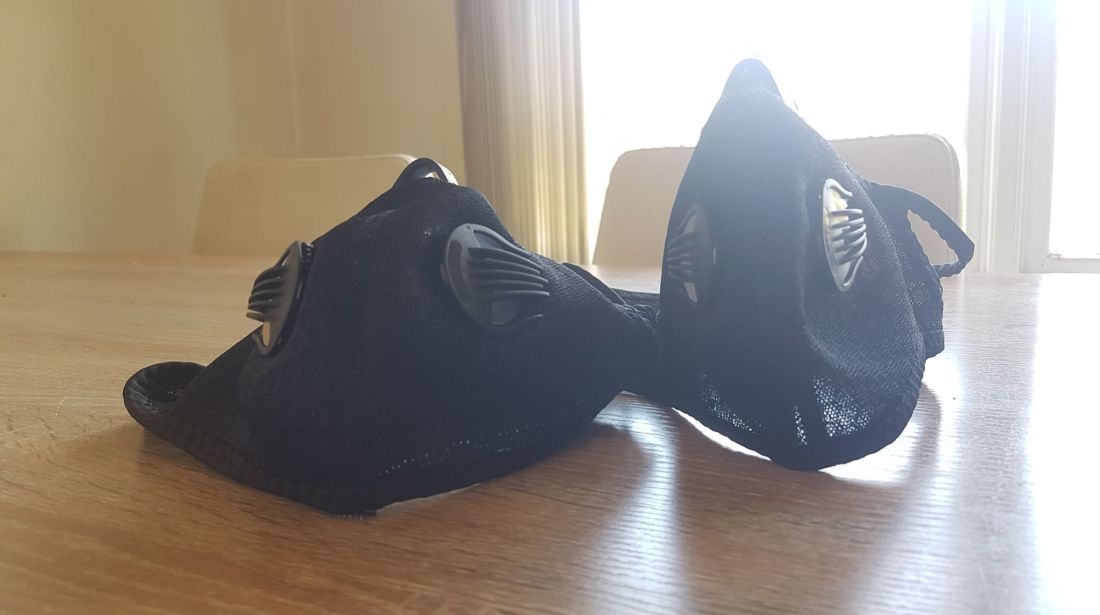
I ordered two P2 masks on Amazon and they were just delivered to my home. These are masks that protect from the small and dangerous particles contained in, among other things, bushfire smoke. I ordered one for me and one for my partner. It is early November and although the fire season has started, Melbourne is yet to be threatened by any major bushfires. Nonetheless, I know that the bushfire season is about to intensify, and this thought looms large as we remember last summer’s Australian bushfires.

The purchase of the P2 masks would not have occurred to me if it was not for last summer’s fires. I wouldn’t even have known what they were. Nonetheless, the smoke drifting in from nearby bushfires last year made air quality a concern. New South Wales and Sydney were especially affected by smoke from the bushfires. So were Canberra, Melbourne and various smaller towns.  And this year we could read about how smoke from bushfires have haunted California residents.

Last year, during days of hazardous air quality in Melbourne, I unsuccessfully attempted to find P2 masks in pharmacies around town. Unsurprisingly, they were sold out everywhere I went. So, while maintain that I feel better having the masks stored in my closet, I cannot help by feeling like a doomsday prepper.

Preppers are people that, for a variety of reasons, prepare for ‘shit to hit the fan’, and society as we know it to collapse. The reasons for the anticipated collapse vary between artificial intelligence, climate change, failure of the economic and agricultural systems, nuclear weapons and more. Preppers seek to make decisions today that will set them up for life in a dystopian future. Preparations include secret hide-out places in the woods, canned- and pickled food and water supplies, bug out bags, sometimes weapons and other tools of survival. Research has shown that preppers tend to consider their efforts a reasonable response and people who do not prepare to be naïve and to place too much trust in governments.

I have yet to build a bunker or started pickling and storing food around the house. Although las summer I did consider storing water as I read that fires risked polluting our drinking water. Moreover, as COVID-19 hit Australia people started stockpiling food at home. Most people (including myself), I believe, got slightly freaked out as the voids in the supermarket shelves expanded. A fight over the last toilet paper in a grocery store in Sydney provides a glimpse of what might come if supplies were to seriously dwindle.

The act of prepping is increasingly featured in literature, movies, tv-shows and podcasts. Despite the common association between prepping, paranoia and minority culture, researchers have found the practise to be more rational and common than those associations would suggest. Prepping they established, is often followed by personal experiences of crisis such as economic damage, ailment or job loss, making them seek out the comforts of preparation. A notion not that dissimilar from my own experiences last year of bushfire smoke and my subsequent prepping activities.

So, am I a prepper now? Or how can we draw a line between ordinary preparedness and the prepping associated with extreme paranoia. As a prepper in the first episode of the 2011 Netflix documentary series Doomsday Preppers said: “I don’t think I’m paranoid, I just think I am well informed and prepared.” Especially, along with climate change (scientifically supported reports of a world in crisis), is the line between prepping and common-sense activities becoming increasingly blurred? I am a cautious person and I would rather buy the car insurance before I get in a crash, so to speak. And as fires rage and the effects from climate change are becoming increasingly tangible, where do we draw the line between warranted worry and overpreparation?

What if you woke up to find that you are not allowed to move beyond 5 kilometres of your home? Oh wait, we already did.

What if you woke up one day to find that you are not allowed to move beyond 5 kilometres of your home? Actually, that already happened. Two months ago, people in Melbourne were told that, from that night forward, we were no longer allowed to go beyond 5 kilometres of our homes (unless for essential work or health related reasons). The Prime Minister of Victoria (the state Melbourne is located in) announced that: ‘Where you slept last night is where you’ll need to stay for the next six weeks’. If the police find you outside of that distance, without a valid reason, you risk incurring a fine of up to $1652 AUD. These are extreme, punitively enforced measure meant to limit the spread of coronavirus by restricting our movements.

Since the lockdown, I try to get out of my house for a daily walk. I walk in circles around my home. Trying and often failing to find new, interesting alternatives to my standard route. I live close to a major road called Ballarat Road. On one side of it, there is an industrial area. However, if I move beyond the anonymous industrial buildings, I reach the river with a trail running along it. Unfortunately, it lacks lighting, and, on weekdays, I usually do not get out before dark. So, I stay on the other side of Ballarat Road, around the residential area. The smaller the roads, the more I prefer to walk there. In the two and a half months I have lived here I have really gotten to know my neighbourhood in ways I usually would not.

What do you have within 5 kilometres of your home? If you are not in Melbourne, imagine if all you could access for the next two months was what is within 5 kilometres of your home. Neighbourhood characteristics, amenities and services are important component of urban equality. Well planned, liveable and healthy neighbourhoods and cities should provide everything you need within a walkable distance.

Similar to the ways COVID-19 is exacerbating issues of mental health, the struggles of doing a PhD, a healthy lifestyle and so on, COVID is also exacerbating social and economic inequalities. I have preciously talked about the significance of a house or apartment and the size of one’s property as we spend more time at home. However, add to this the inequalities associated with location. There is a huge disparity between living within five kilometres of a beach, a green area or in a satellite suburb (suburbs on the outskirts of major cities) far from amenities. Is your neighbourhood walkable? Do you have access to green open spaces? These inequalities remain after the 5 km rule is lifted and when shops, cafes, restaurants and bars reopen once again. What amenities are within five kilometres of your home? The cinema? A swimming pool? A gym? How many choices of restaurants and cafes?

These ideas are articulated in ‘20-minute neighbourhoods’, an approach to city planning proposing that everyone should be able to access a variety of services within a twenty-minute walkable round trip of their homes (about 800 meters one-way). This includes education, shopping, recreational and sporting facilities, business services and some job opportunities. Also, 20-minute neighbourhoods are walkable and provide high-quality open spaces. The establishment of a 20-minute city is an important component in the state government’s plans for Melbourne in the coming decades. However, we are still far from meeting that goal.

The 20-minute test is more stringent than the 5 kilometre one. Nonetheless the 5-kilometre restrictions, expected to last for at least another two weeks in Melbourne, underscore the injustices that are woven into the urban landscape.  Whether you currently spend your life within five kilometres of your home or are allowed to move around freely, we should stop to consider the equality of our cities and what minimal standards of accessibility we required in our neighbourhoods.

How to get through this summer’s bushfires: Lessons from California

As we approach the Australian summer, we are also getting closer to another potentially devastating bushfire season. The upcoming fire season will be unlike any before as it takes place during a global pandemic. Australia has a lot to learn from the problems facing California, as they battle serious bushfires while still heavily accosted by the Coronavirus. Hundreds of fires are raging across California. The fires have destroyed more than a thousand homes and non-residential buildings and at least seven people have lost their lives. California, with a similarly flammable landscape to Australia, helps us foresee what is to come. It demonstrates how the threat of fires is intensified by the pandemic and vice versa. As the Australian summer approaches, in a country still recovering the losses from last summer’s fires, there is a lot to learn from the situation currently facing California.

In California, incarcerated labourers with an hourly rate of $2 USD and promises of reduced sentences, are an important firefighting resource. However, this year many convicts are unavailable following various severe Coronavirus outbreaks in prisons. Other, non-incarcerated firefighters are exposed to the added risk of contracting the virus as they work and often live in close proximity of each other. This in turn could lead them to unintentionally bringing the virus back home to close family and friends. Moreover, the exposure to the smoke from bushfires put firefighter at risk of worsening the COVID-symptoms and its consequences. These are concerns to be taken seriously in relation to the Australian firefighting response. During last summer’s fires, the Australia government was heavily critiqued for their lack of financial compensation for the large volume of volunteer firefighters making up Australia’s bushfire response. In the coming weeks, the Australian Fire and Emergency Services need to reflect on its bushfire response to minimising the adverse impact of the virus.

Also, the virus brings with it some added difficulties surrounding evacuation. Over a hundred thousand people have had to evacuate around California, leaving their homes to escape the deadly fires. It is crucial that Australia review their evacuation procedures. How will people be evacuated and where will they be given emergency shelter to prevent the virus to spread? This, I argue, requires particular attention in view of the recent hotel quarantine failure in Victoria, which caused the state’s deadly ‘second wave’ of infections. The Australian government should carefully consider the most appropriate evacuation procedures and how to support people that lose their homes temporarily or more long-term.

Finally, prisoners are vulnerable in a pandemic, due to the large number of people forced together in small spaces. Due to their restricted movements, they are also vulnerable to disasters such as bushfires. In California, incarcerated people were suffering as the fires approached. Although the areas around the prison had been evacuated, the prisoners were left in-place. They lack the authority to evacuate and were left breading the toxic smoke. For a prison system challenged by a pandemic that feeds off the proximity of bodies in confined spaces, bushfires represent an added threat. The Australian Corrections still have some time to prepare and should consider when and how a necessary evacuation should take place in order to avoid unnecessary harm to people in their care.

Although parts of Australia are currently in the midst of their bushfire season, the most flammable landscapes still have theirs to come. Judging from the early start to last year’s fire season, larger bushfires could be expected within the month and this year will be unlike any before. Among the added concerns are the exposure to toxic smoke from the fires, the risk of firefighters getting infected by the virus, mass evacuation and prisons. Thus far, we have been asked to stay home in order to remain safe from the pandemic. Leaving home is to expose ourselves and those we love to the virus. Severe fires will threaten some people’s access to that safe haven. Consequently, the Australian government needs to think through the implications of such loss and how to best get through the summer.

The State of Emergency/Disaster as the new emergency: Climate change and the new role of the democratic state

Yesterday, just over three weeks into Melbourne’s second lockdown, Daniel Andrews, the Premier of Victoria announced stage four restrictions for metropolitan Melbourne and a State of Disaster in Victoria. The stage three restrictions already required people to stay home except for work, health reasons, essential shopping and exercise. With the new restrictions in place, active as of 6pm last night, a curfew is imposed between 8pm and 5am when the only reasons to leave your home are for work and medical care. Among other restrictions, exercise must now take place within 5km of your home, at a maximum of one hour per day and only one person per household can go shopping each day. Since midnight Wednesday the 22nd of July, face masks are mandatory and those caught without one risk a fine of $200. Victorians caught failing to comply with the social distancing restrictions, including the new rules, will be fined $1600.

These restrictions have a severe and limiting impact on Victorian residents’ lives. We are experiences heavily restricted movements (locally and internationally), the closing of businesses, the suspension of sporting and cultural events and institutions, surveillance of people and forced hotel quarantine for returning Australians at a cost of at least 3,000 to be paid by the traveller. Most of us accept the restrictions since we understand the severity of the novel Coronavirus, because others seem to accept them, but also because we submit to the settler colonial state of Australia. That is, most of us tend to follow the laws and if the laws make us stay home, we do.

Nonetheless, we are many who feel conflicted about whether the measures are appropriate or whether they are causing more harm than good. The stay-at-home measures affect people disproportionately depending on whether you are isolated in a studio apartment without a balcony or a 500 square meter mansion with a rose garden. Moreover, we are seeing that these measures are applied differently on different populations and tend to disproportionately disadvantaged lower socioeconomic groups. This is demonstrated by the 3,000 residents in nine public housing towers in North Melbourne and Flemington, two relatively central neighbourhoods in Melbourne, who on the 4th of July were put under ‘hard lockdown’ for up to 14 days (the full time applied to one of the towers) after high numbers of infections were detected in the buildings. The high density in the public housing towers, the shared facilities such as laundry rooms and lifts, airflow, plumbing and the high numbers of infections were used to justify the harsh measures. Residents in the public housing towers under ‘hard lockdown’ or ‘detention directions’ were not permitted to leave their homes. These strict measures were not applied to anyone else in Victoria and in private apartment towers, not far from the public housing ones, people were living according to the general restrictions in Melbourne.

The hard lockdown represents excessive and punitive measures directed towards already over-policed communities, while outbreaks in more affluent areas are met with a dissimilar response. This is a punishment of the socially and economically disadvantaged public housing residents already neglected by the system.

So, what is the regulation that allows the government to put in place such restrictions? These laws are justified by a state of emergency initially declared in Victoria on the 16th of March 2020 and which is currently extended until the 16th of August 2020. State of emergency or state of exception is a concept coined by Carl Schmitt writing in Germany during the Nazi rule. The concept refers to the sovereign’s right to act outside the normal legal constrains when circumstances are out of the ordinary. Both legally and discursively the state of emergency justifies extreme actions and allows the sovereign additional powers to act. The state of emergency or the state of exception allow the temporary suspension of many human rights treaties. Consequently, it has been noted that restrictive measures to COVID-19 around the world come to infringe on human rights such as the freedom of association, the freedom of movement and the right to liberty. These are methods which could be misused for political purposes that would severely detract from democratic rule.

However, the state of exception is not so exceptional anymore, instead it is becoming the new normal. The fear is that restrictions will remain following the end of the COVID emergency, similar to the way the 9/11 terrorist attacks led to the extended powers of the US Presidents to perform torture and surveillance. Giorgio Agamben, one of modern day’s most influential writers on the state of exception, has severely criticised the Italian government’s response to the virus, claiming that the restrictive and repressive measures lack sufficient justified. This, he writes, reinforces the tendency to normalise the state of exception, ‘as a normal governing paradigm’, justifying a militarisation of society. Worryingly, yesterday the Victorian Premier declared at the press conference that he is prepared to make amendments to the 6-month restriction to the state of emergency, showing clear signs of a normalisation of these laws.  

The state of emergency is not only applied in relation to health crises but can be called on by governments to respond to dangerous and extraordinary circumstances such as threats to national security and natural disasters. Yesterday, the Victorian Government also declared a state of disaster which according to the Premier Daniel Andrews ‘will give our police additional powers to make sure people are complying with public health directions’.

A state of disaster was declared earlier in the year in large parts of Victoria as a response to the bushfires, allowing the government to, among other things, force the evacuation of people. I have previously written on the important connections between climate change and increasingly severe bushfire seasons. It is generally agreed that climate change such as dryer and hotter temperatures leads to increasingly severe bushfires (for example). Similarly, experts are highlighting the connections between the COVID-19 pandemic and climate change. Three out of four infectious diseases found in people originate from either wild animals or livestock and therefore our health is deeply entangled with the health of the ecosystem. Moreover, climate change is making large parts of the human population more vulnerable to disease and other health threats. For example, the exposure to the smoke from last summer’s fires is intensifying our vulnerability to respiratory illnesses.

With the increasingly severe consequences of climate change and our degrading ecosystem, demonstrated in bushfires and the pandemic, the motives for the state of emergency/disaster measures will increase with the risk of detracting from democracy in ways already demonstrated, such as through the encroachment on human rights agreements. Moreover, as demonstrated in Melbourne by the treatment of public housing tenants, there is no guarantee that measures will apply equally to all. Or rather, it is unlikely that they will, since everyone enters a state of exception with access to dissimilar resources and capitals. It might make sense to have state of disaster measures in place for the crisis, but when the crisis becomes the new normal, it is worth considering the new role of the democratic state. We have to be careful, moving forward, that responses to emergencies are balanced against human rights and democratic values.

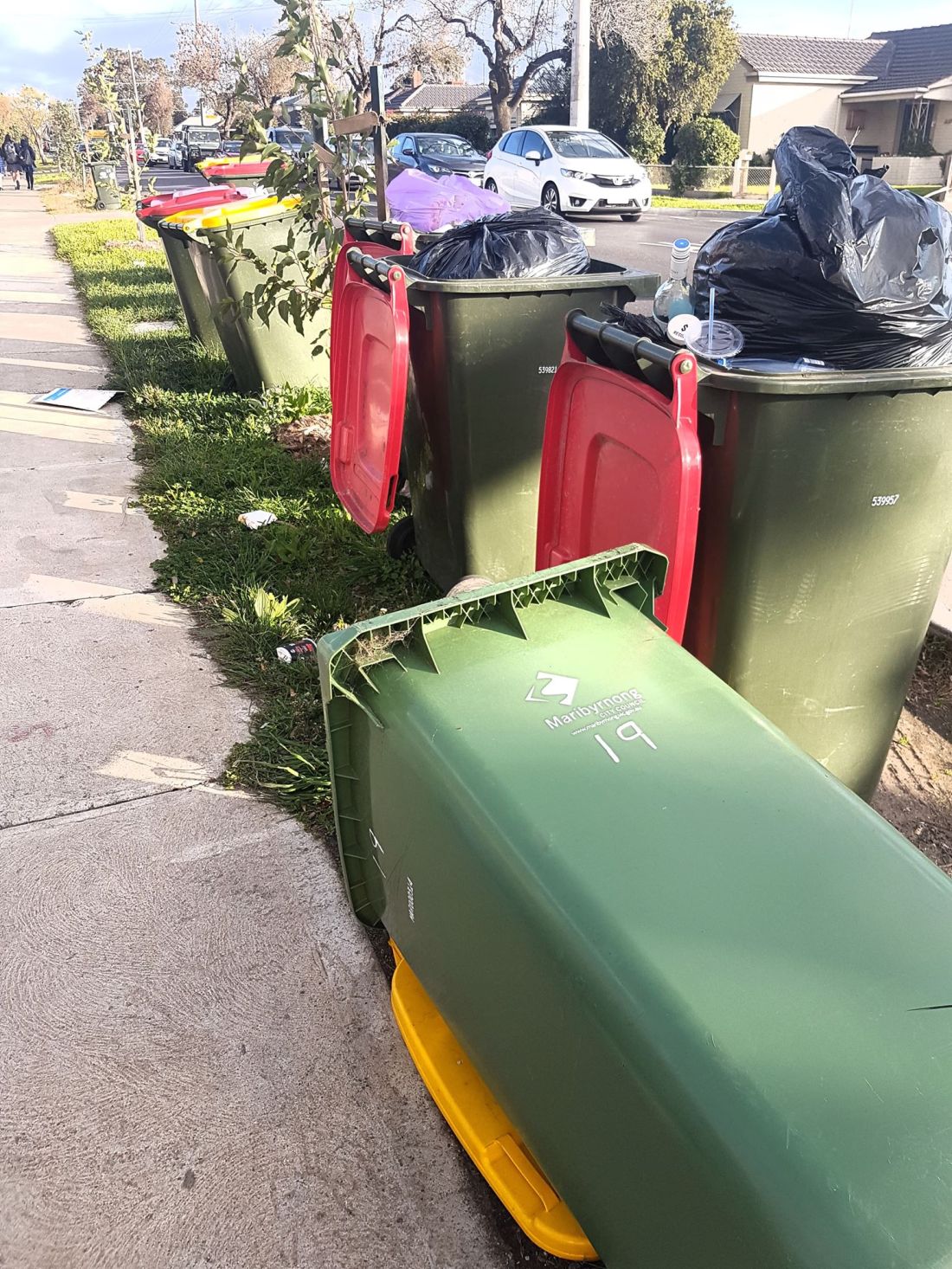
Waste: Out of sight, out of mind

Today I am writing about something that often occupies my mind: waste. Waste is a word that encompasses so many things. A beloved item, clothing out of style or a mouth-watering meal from the week before can with the passing of time turn to waste in our minds. I say in our minds because waste, more than anything, is a state of mind and a highly individual framing. Waste, in all its forms, could therefore be understood as that which we no longer desire to be in the presence of. This goes for broken items and spoiled foods, but it also encompasses a lot of fully functional but for some reason undesirable items. When no longer desired, such items become unwanted, an eyesore and are classified as waste, followed by attempts to do away with it. Rubbish is therefore often hidden away under kitchen counters, the sights and smells restricted by bin lids, and as soon as possible we seek to remove it from our living quarters to the large bins at the back of the house. After it has been picked up and taken away, it is out of sight and out of mind. When possible, we like to send it to a country far, far, away, cram it into stockpiles or dig it down in landfills. Waste out of sight allows us to forget about it and it permits us to continue to produce and consume more items.

I am not necessarily leading up to a solution here but instead I am emphasising what I see as a major issue: that we are out of touch with our rubbish. As we place it in the bin, we could think about whether we could give it another life, whether it could be repurposed or anyone else would find value in it. Yet, even this is to undershoot. Instead, that thought should better come to us in the moment that we purchase something. Buying an item, or even accepting it for free, do we consider the lifespan of it and could we consider getting a second-hand item instead? I reckon that it is way too easy to wink at the fact that a now so desirable item, one day will seem redundant to us and will end up as waste.

Last week we could read about Liz and Brian, a Melbourne couple who put their rubbish bin out for the first time in a year. To clarify, this consisted of only one bin of landfill waste that they had collected over 12 months. So, how was this achieved? By reusing, recycling and repurposing as much as possible. They also try to reduce waste by avoiding purchasing items such as vegetable in plastic packages. In other words, they have managed to reduce their contribution to landfill through conscious buying, reusing and disposal. When possible, they give items a second life. As the couple themselves recognise, this is a time-consuming task and not achievable for everyone. Yet, we could all reduce our landfill by applying these same principles.

Although not an anticipated alternative per se, if we were forced to look at the waste we generate, perhaps to sleep next to it at night, to display it openly in the front yard or as a mountain in the centre of town, would that change our relation to consumption and waste? What if the council ceased all waste collection for a year? Would visual and other sensory confrontation with waste change our relationship to it? And could it also shift our relationship to our accumulation of possessions and the objects of our desire? As it is now, it is way too easy to drop something in the bin and forget that it ever existed. I know, because forgetting is often what I try to do.

What do or could you do to reduce your landfill contribution?

Remember the bushfires? The Royal Commission sees bushfires and climate back on the agenda

As COVID-19 has disrupted our everyday lives, last summer’s fires have all but escaped our immediate consciousness. Along with the clearing of the smoke, the fact that just last summer (November 2019 – February 2020) large parts of Australia were under duress from fires has gradually lifted from our minds. The bushfires largely disappeared from the political and news agendas as a result of tackling the current health crisis. From being everywhere on national (and international) news, it became rare to see the bushfires mentioned. The fires were the perfect, terrible example of what a world changed by human impact on the climate looks like. Therefore, the fact that the fires so quickly became overshadowed by the virus was a loss for everyone seeking government action to reduce further impact on the climate. Although we can speculate whether the long-term effects of COVID-19 will be better or worse for the environment, for environmental activism fuelled by the fires, the timing was tragic.  

The immediate and undeniable threat of hot, scorching fires make them the perfect symbol of climate change. Similar to COVID-19, fires have clearly conceivable consequences if no actions are taken. Bushfires are immediate, terrifying and pose direct threats to humans, wildlife and properties. Therefore, bushfires require government action, both during fire events such as by fighting the fires and coordinating evacuation but also through the repeated inquiries that tend to follow serious fire event. These inquiries are often aimed at improving preparedness and responses to bushfires, such as the 2009 Royal Commission into the Black Saturday fires. Climate change on the other hand, is the opposite. We are now experiencing the effects of large amounts of greenhouse gases such as carbon dioxide, methane and nitrous oxide being released into the Earth’s atmosphere over the last two centuries. Although the consequences of global warming are delayed, the effects of the changing climate are increasingly experienced around the world. Examples of the effects are rising sea levels, more hot days, extreme weather events as well as acidifying and warming oceans (See WWF for more details on the effects of global warming in Australia). As the summers are becoming warmer and dryer, fire regimes are changing, fire seasons are becoming longer and extreme fire events more frequent.

Although the last couple of months have made the fires fade from the public consciousness, the last two weeks saw the start of the Royal Commission into National Natural Disaster Arrangements (Block one of hearings were carried out between the 25th of May and the 4th of June), into last summer’s fires. This has served to put bushfires back on the agenda. Royal Commissions are ad-hoc official public inquiries into a particular issue. However, their efficiency has been questioned. Many of the recommendations that stem from these inquiries are slow to be taken up or are never implemented at all. Moreover, the Victorian Bushfires Royal Commission in 2009 cost a minimum of A$40 million over a period of 18 months. Naturally, this money could have been spent differently to manage fires and prevent harm.

So, the question to be asked is: is there any value to this inquiry? TheRoyal Commission into National Natural Disaster Arrangements, although potentially toothless, has put bushfires back on the agenda. However, will this inquiry contribute with anything new and valuable? A report by the Bushfire and Natural Hazards CRC in 2017 into 51 major bushfire inquires between 1939 and 2013 in Australia found that several themes tend to reoccur. The 1728 recommendations of these inquiries were grouped into six categories: shared responsibility, preparedness, response, recovery, fire agency organisation, and, research and technology. However, climate change was not one of these.

On the contrary, the terms of reference of the current public inquiry acknowledge the role of the changing global climate and what this means for Australia’s capacity to prevent and response to bushfires. The first days of the inquiry’s public hearings have also centred around the effects the changing climate is having on the frequency and severity of bushfires. Among others, Karl Braganza, the head of climate monitoring at the Bureau of Meteorology, described how increasing temperatures, especially more frequent heatwaves and decreased rainfall is contributing to the fire conditions witnessed last summer. It was also made clear that severe fire seasons, similar to last summer’s, will be repeated in the decades to come.

The Royal Commission’s emphasis on climate change is a step in the right direction and hopefully these tendencies will be palpable in the Commission’s recommendations and beyond. Given that the Australian government largely has denied the impacts of climate change and even more so avoided taking action against it, I hope the Royal Commission can contribute to a formal acknowledgement of climate change, the effects of which are discernible in the occurrence of longer fire seasons and more extreme fire events. In addition, with the initiation of the inquiry, bushfires are back on the agenda and this is a tendency that environmental activists, academics and practitioners can and should take advantage of to further our cause.

Advancing to normalcy

Many countries around the world are starting to lift the COVID-19 emergency measures and to slowly return back to normalcy. The reason, more than anything, seems to be to slow the effects of the anticipated recession as state funds are dwindling and money printing presses are running warm. The dos and don’ts of managing this health crisis, I leave to others to discuss. Instead, I want to think through travelling and transport choices in the COVID and post-COVID world. Clearly, many communities are put under enormous economic pressure, especially those that are dependent on tourism, and unemployment numbers are climbing. However, I argue that we should not be so quick to rush back to previous travelling behaviours and in this blog post I want to think through ways to advance to a new normalcy, rather than moving back to what was before.

Firstly, how will the pandemic affect the way we move in the city? The question of public transport is caught up in the issue of contamination as the system is currently built around a high density of bodies in shared spaces. During the last two months, a few times I have had to utilise public transport for essential travel, and the change in travelling behaviour is striking. The empty trams have an eerie feel to them with only a handful of passengers in the otherwise so packed spaces. Naturally, this is due to less people moving around in the city but during the last two months more people have also been selecting cycling over public transport. As we transition out of in-house lockdowns and people once again have a reason to move around the city, will people continue to avoid public transport in favour of cycling, or will there be an increase in the use of cars? Resorting to the private spaces of the individual vehicle is not an option for everyone and it is certainly not a sustainable one. Instead I suggest that other options should be explored. In Melbourne, following the examples of major cities around Europe, there is a proposal for footpaths and bike lanes to be expanded in order to provide alternatives to public transport and to allow for more distancing between people. This will be at the expense of on-street parking. These are great examples of the ways transitioning out of isolation can be combined with more sustainable patterns of life. 

At the same time, the European Union is urging European countries to reopen the boarders. “This is not going to be a normal summer… but when we all do our part we don’t have to face a summer stuck at home or completely lost for tourism industry,” Margrethe Vestager, the EU Commission Executive Vice-President announced at a press conference last Wednesday. Although I strongly sympathise with the tourist industry and European countries dependent on wealthy tourists from abroad, let us consider alternative to air travel with less adverse effects on the environment.

Luxuries become habits and habits becomes taken for granted. Before the pandemic, travelling to faraway destinations was no longer a luxury but rather the bare minimum requirement for many. For the last two months, here in Melbourne, we haven’t been allowed to travel anywhere really. As someone who works from home, my life has consisted of a five-kilometre radius around my house, which is about as far as I get on my runs. To travel anywhere right now seems like a luxury to me. I long for the Victorian countryside outside of Melbourne, the beaches and the valleys. I long to meet up with my friends in the city, to see my colleagues at work and to travel to visit my friends in different suburbs. Let us not resort to old habits of treating international flights as the norm. Let us instead treat it as something special, a luxury or the last resort.

Tourism can be undertaken in various ways and local attractions have a lot to offer. Nonetheless, the allures of the different, the far-away and the unknown remain. So, perhaps it is time to properly invest in more sustainable modes of travel. Holidays by train is the new black in Europe, but it is expensive and as many other ‘green’ alternatives therefore not available to or desirable for everyone. I am not sure whether the cost of train travel is representative of the cost of building and managing the infrastructure or, which I suspect, the discrepancy in flight and train prices is the result of allowing the ‘market’ to rule. Nonetheless, before we rush back into normalcy and previous travel behaviours, let us think about what travelling is necessary, what is sustainable and whether this is a good time to readjust some of those itinerant expectations.